
A New Spiritual Opening in the Sufi Landscape: Jalalpur Sharif and the Chishti-Akbari Synthesis
I first encountered Syed Hamza Jalalpuri when we had the honour of his presence in my Metaphysics & Logic class at BT Academy. Syed Hamza is an Ahl al-Bayt grandson of the Holy Prophet, the Master of the First and the Last, our master Muhammad ﷺ, but I did not yet know that he is moreover a 40th Sufi Master of the Chishti Order of his (ﷺ) spiritual inheritance.
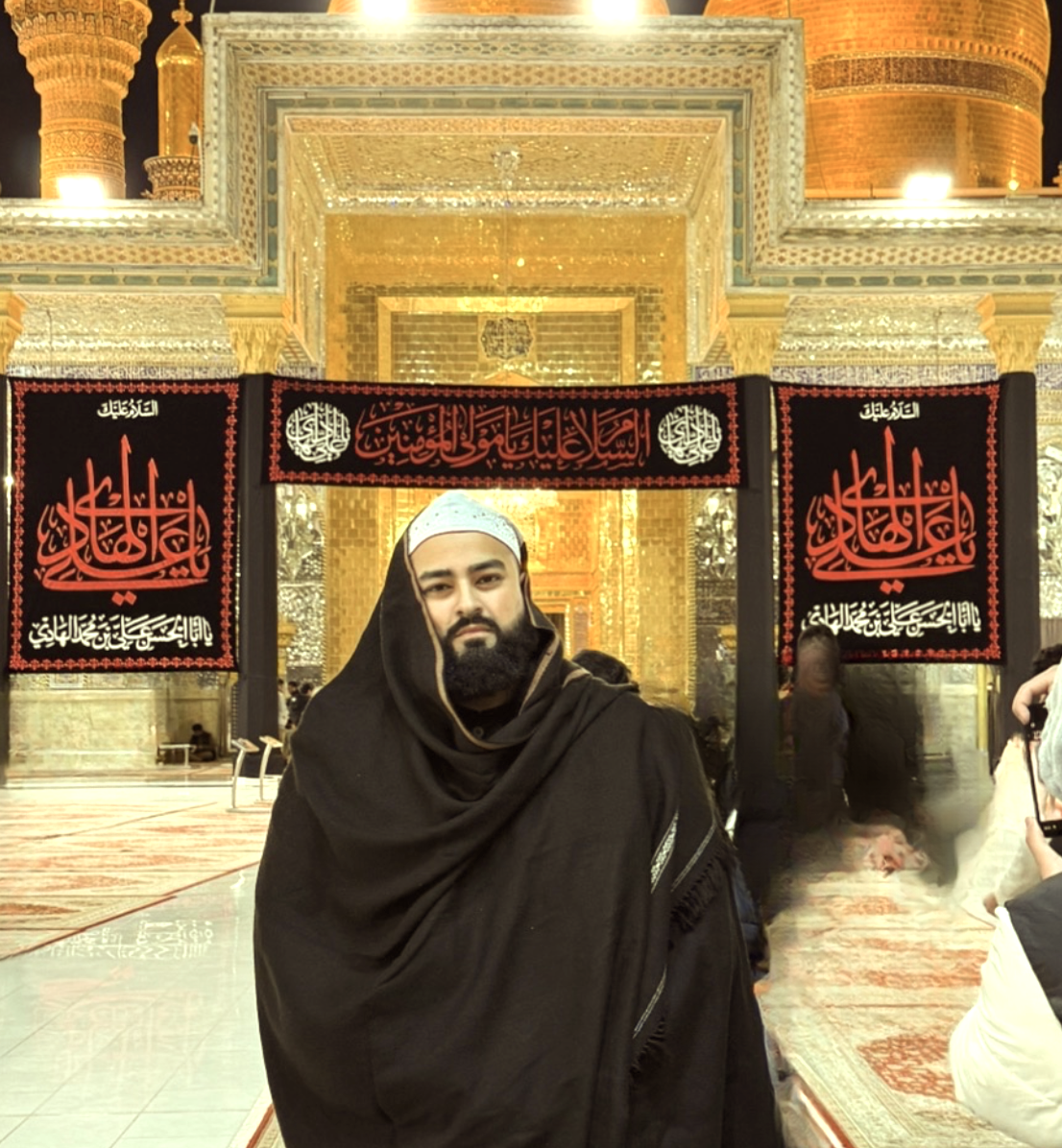
Sayyid Ḥamza Jalālpūrī
Nonetheless, during an office hours meeting, I was struck by Syed Hamza’s presence, and by his courtly adab, as well as his overflowing, sincere love for the awliya, and what I can only describe as passionate love for the Holy Prophet ﷺ; and I was also inspirited when he described me as unusual amongst scholars and thinkers - labels that I am far from presuming for myself - in having palpable jadhb for the love of the Reality of the Prophet ﷺ.
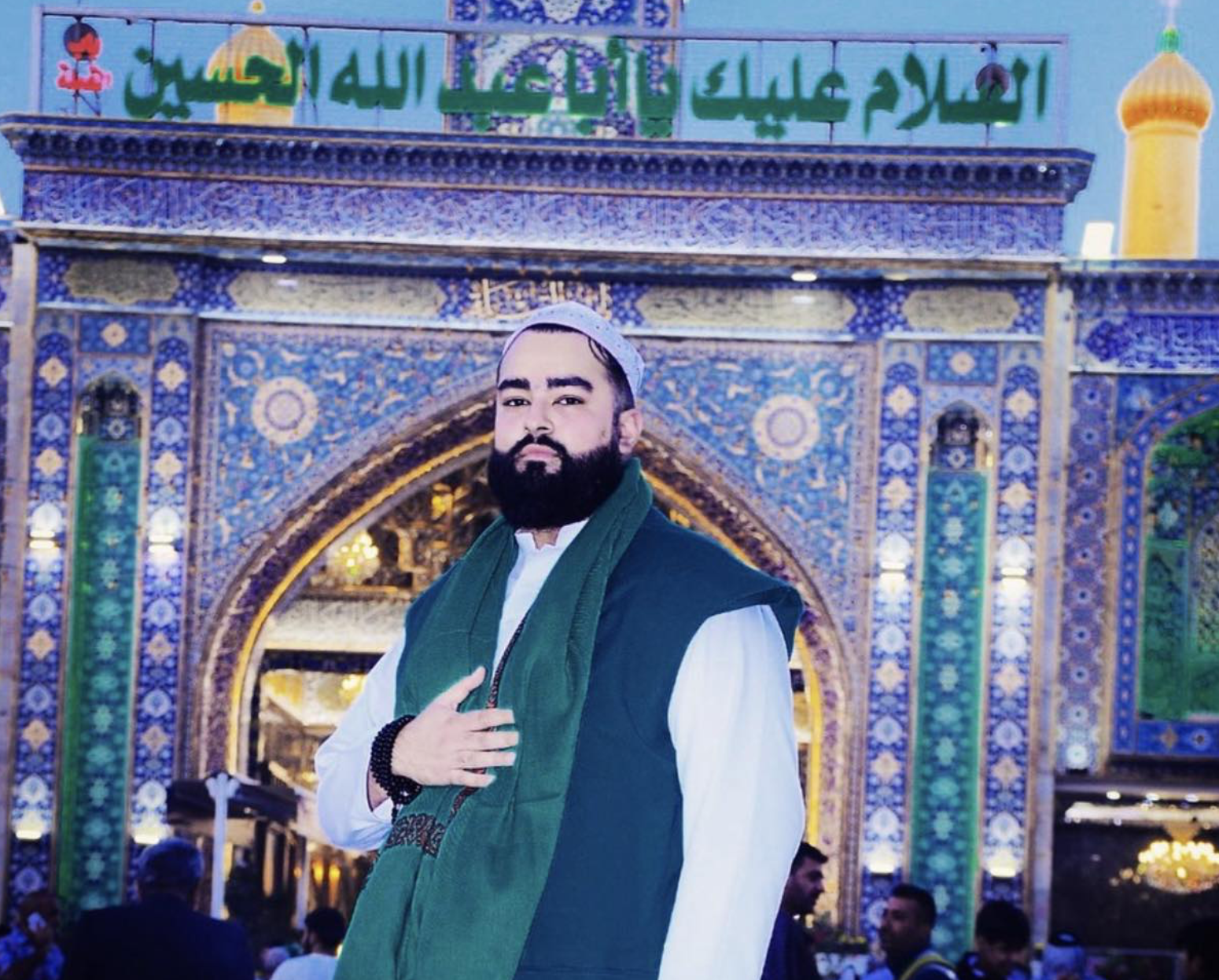
During that initial meeting, it was clear Syed Hamza came from an established and well-known Ahl al-Bayt family from the Subcontinent; and yet in his humility and adab, he did not divulge the fact that he is not only very visibly Ahl al-Bayt - mukāshafūn have noted how much he looks like Imam Husayn - but moreover an authorised Sufi Master of the Chishti Order, making him a 40th Sufi Master of the Chishti Order of his spiritual inheritance.
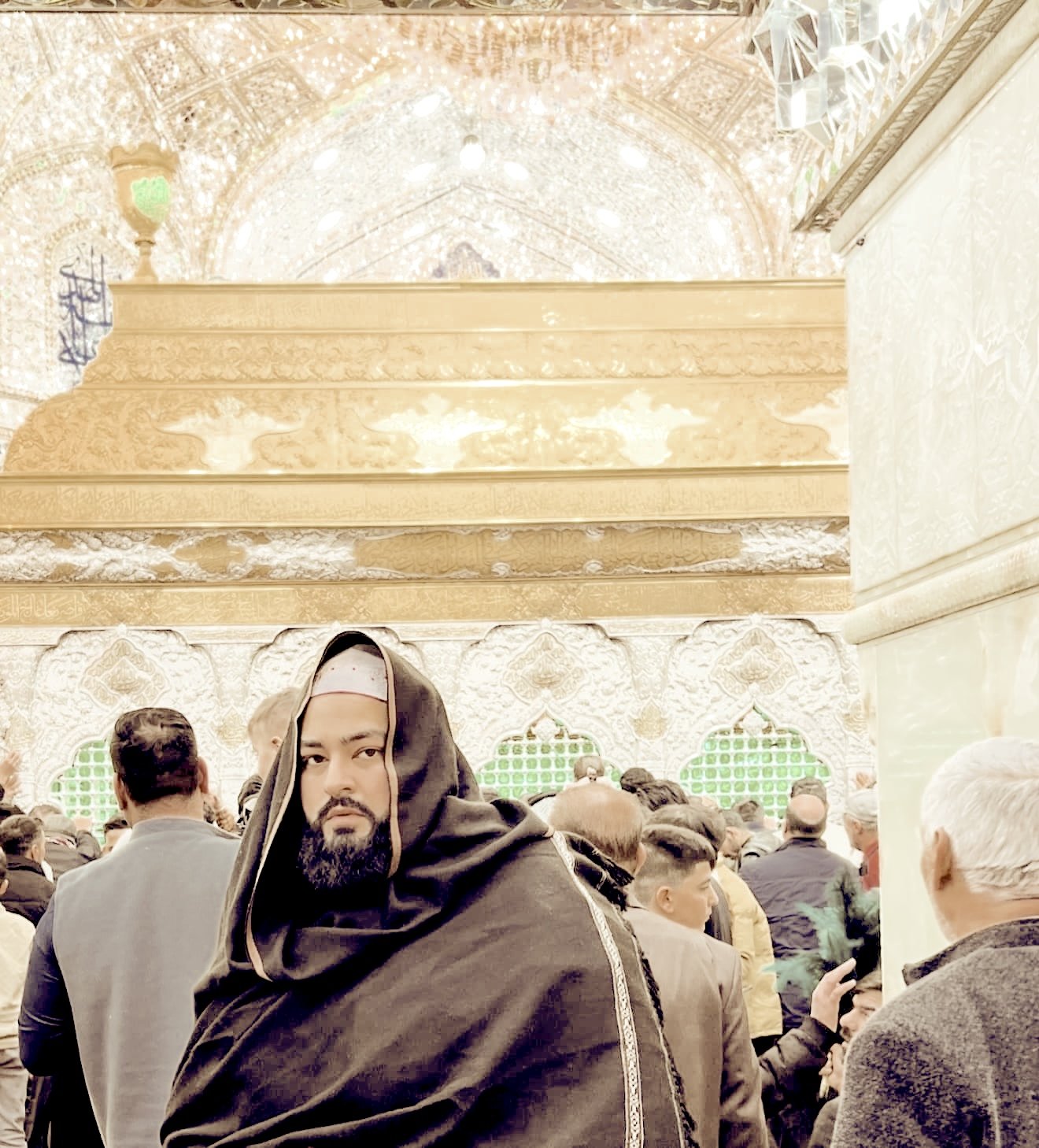
Yet in that office hours meeting I did find out that he had a family reliquary, in their adopted home of Canada, in which there are many holy relics from saints across the Muslim world, including going back to the Sahaba, and indeed the Holy Prophet ﷺ himself.
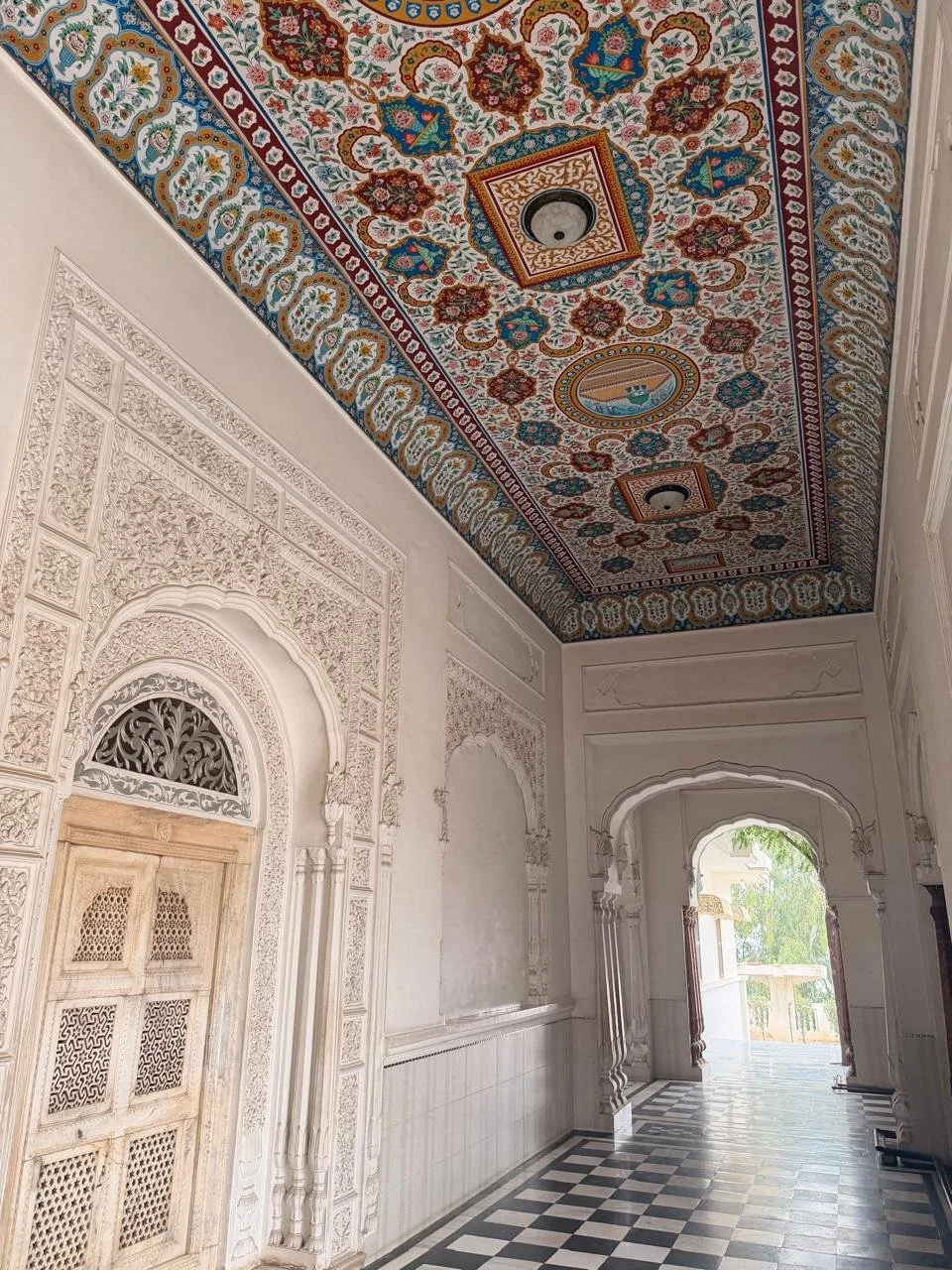
The approach to the blessed shrine at Jalalpur Sharif
Soon after this initial meeting, I received a message from Syed Hamza. He had had a bishāra or portentous sign that I should be entrusted as the caretaker of one of the Holy Hairs of the Prophet ﷺ from the reliquary, as well as an ancient fragment of one of the turbans of Imam Hussain.
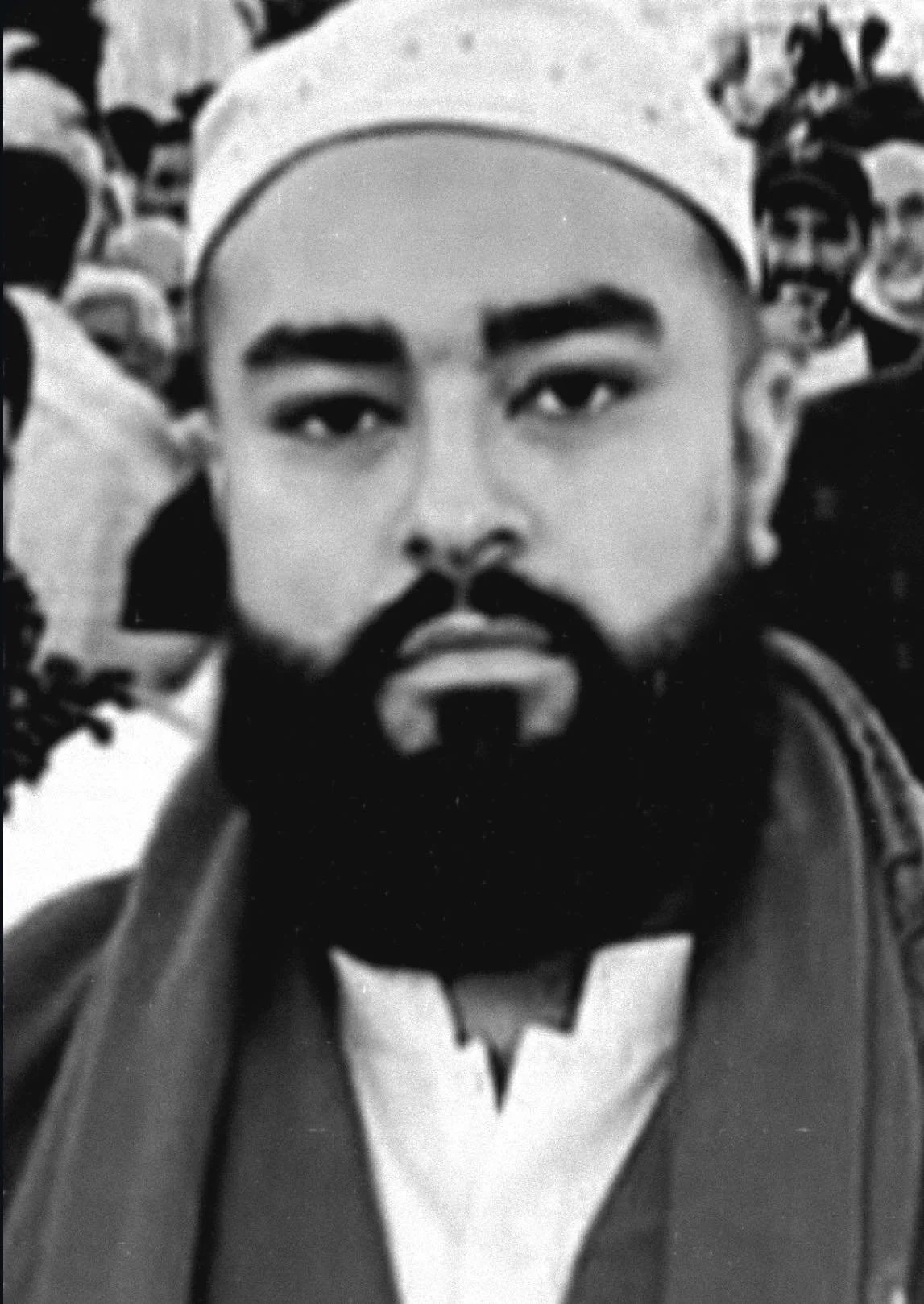
He had been given the Holy Hair in al-Madīna al-Munawwara, and I had recently moved there - in that sense it would be returning home. I was overwhelmed, and feeling deeply and very sincerely unworthy, I attempted to decline, insisting that the holy relic was already at home with the Ahl al-Bayt; Syed Hamza, however, assured me that he has received a sign that this was meant to be, and asked me to pray istikhāra about the matter; and he then informed me that he would soon be coming to al-Madīna al-Munawwara with some of his murīds.
And so the first time I would see Syed Hamza in person was in al-Madīna al-Munawwara. Seeing him there felt like seeing one of its true inhabitants. The Ahl al-Bayt all have a special baraka, but Syed Hamza embodies and exemplifies their reality is a way that is entirely unmistakable both outwardly and inwardly.

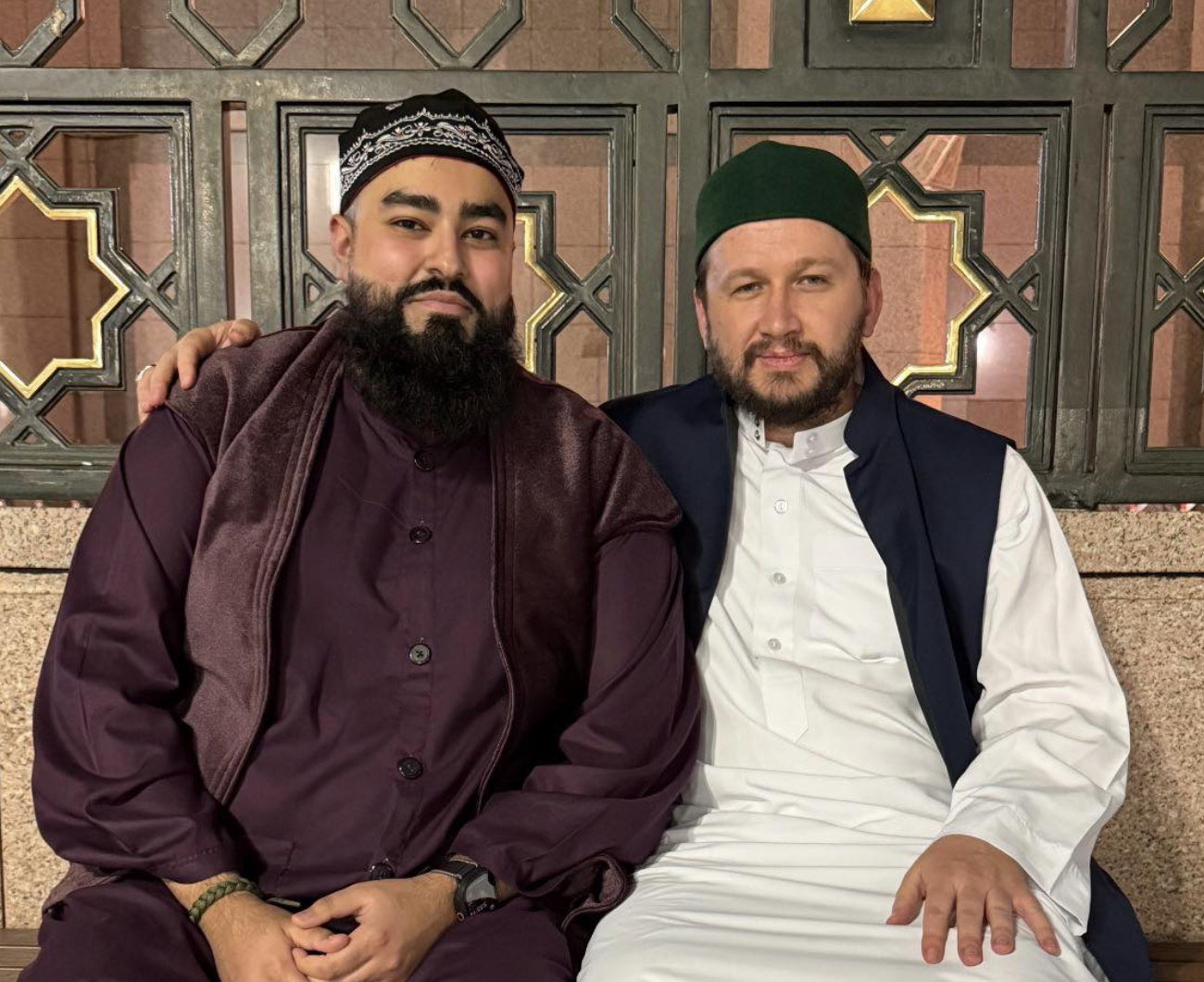
Syed Hamza and Hasan Spiker in al-Madinah al-Munawwarah
At the crowded maqām of Sayyid al-Shuhada at Uhud one evening, Syed Hamza and I both commented on how much we would love to meet a renowned Friend of Allah, Shaykh Madih, known to frequent Uhud, whom we had never personally encountered, but whose extraordinary jadhb and station had been conveyed to us by Sufi friends we trust and respect.
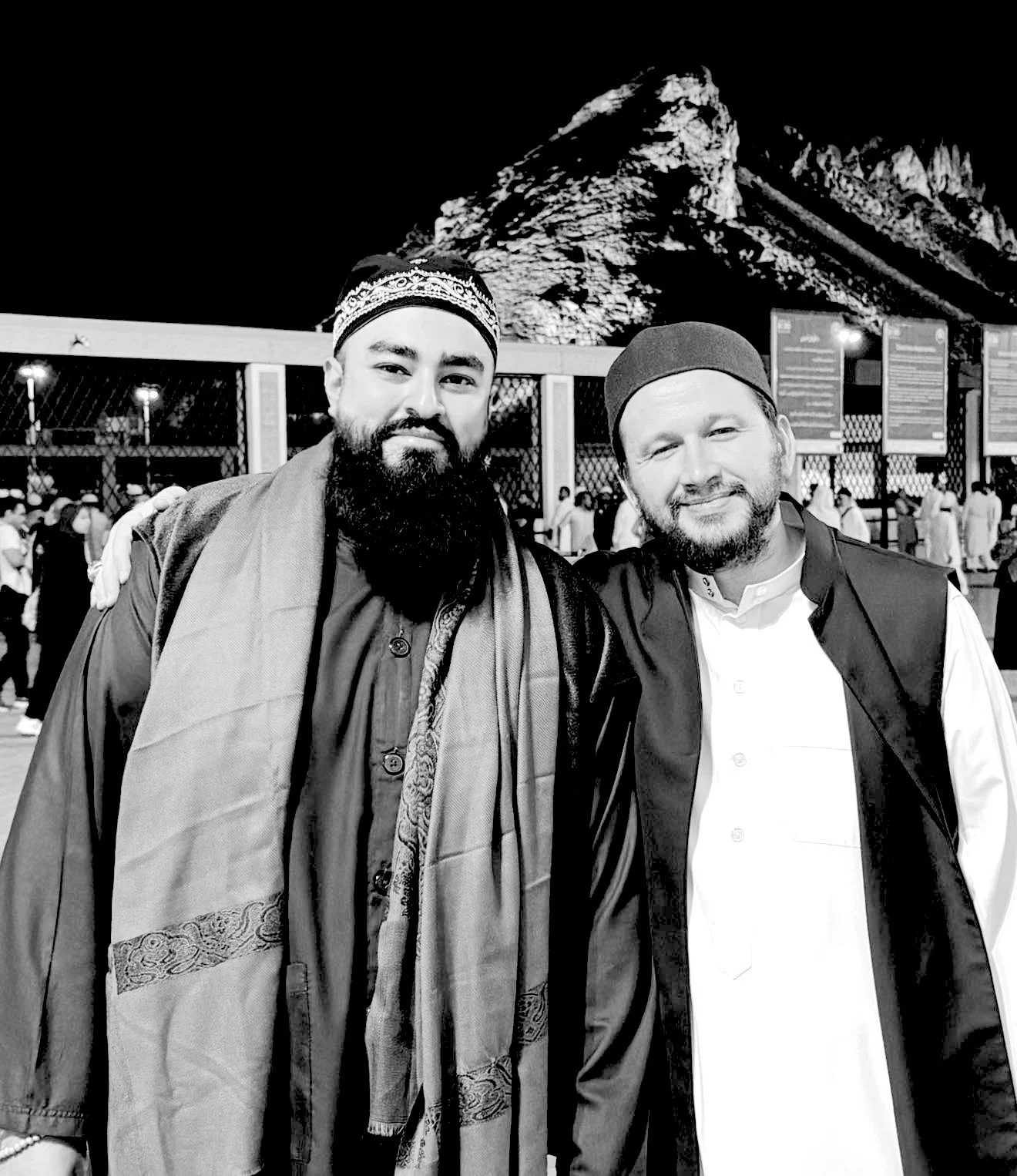
Syed Hamza and Hasan Spiker at Sayyid al-Shuhada, Uhud
Moments later, Shaykh Madih suddenly appeared out of nowhere, and despite not knowing us at all (at least, not by any ordinary means), strode straight up to us with unwavering directness, as if we were long-awaited guests.
Shaykh Madih then invited us to sit with him, Syed Hamza directly next to him, to recite the nightly recitation of the Burda that he completes every night at the maqām. But at a certain moment, he paused, having seemed to have noticed something; he placed his hand meaningfully on Syed Hamza’s leg, and then said, ‘Hold on, are you Ahl al-Bayt?’
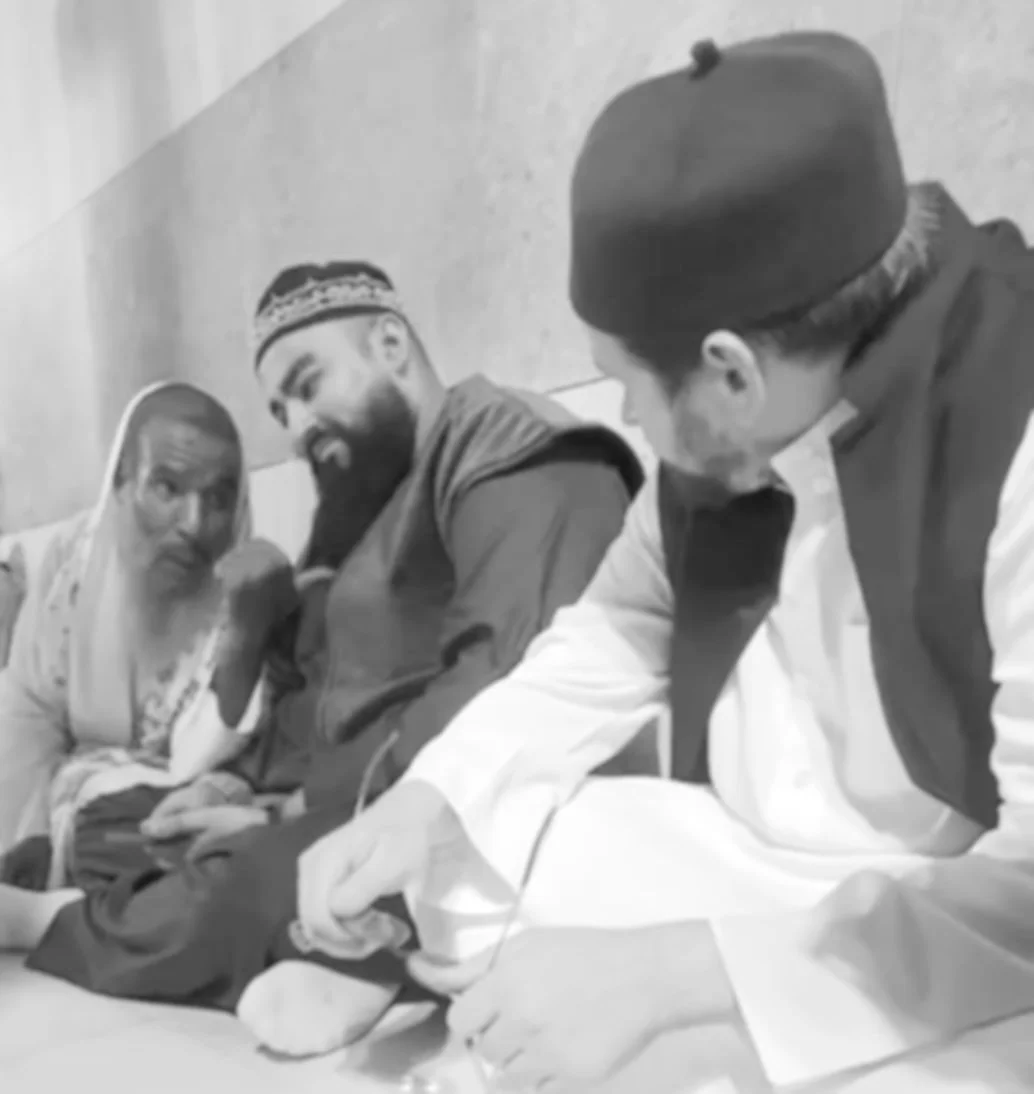
Shaykh Madih at Uhud
Syed Hamza was immediately moved to tears. Later, I would find out about the extraordinarily high esteem in which Syed Hamza was held by Shaykh Madih.
READ ON ABOVE
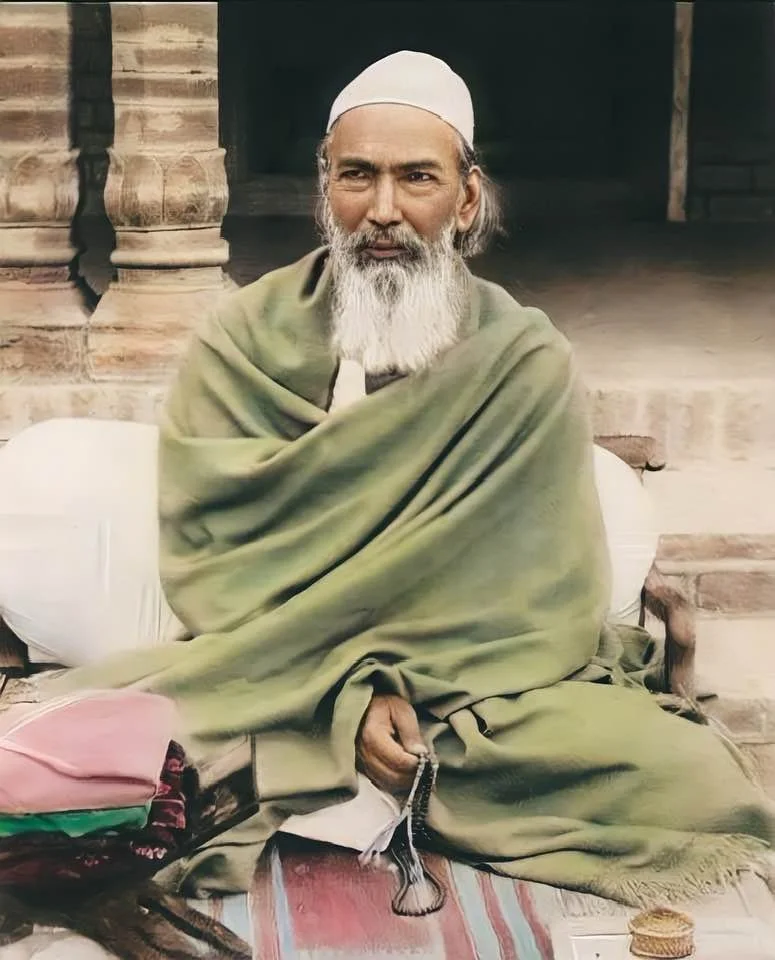
Pīr Sayyid Ḥaydar ʿAlī Shāh
Not long after his departure from al-Madinah al-Munawwara, and having found that in the intervening period, a longstanding pull towards the Chishti Order had intensified, particularly its emphasis on service to the poor and spiritual audition (samãʿ), I would receive another message from Syed Hamza, this one even more unexpected:
Syed Hamza informed me that he had had another bishāra: he would initiate me into the Order, authorise me as his khalīfa, and allow me to accept and train murīds as 41st Sufi guide and master in the silsila (of course, as a humble servant of the Chisht, I truly do not presume this title) - all, of course, under the guidance and supervision of the entire silsila, the Ahl al-Bayt, and particularly our living Grandshaykh, Syed Hamza Jalapuri.
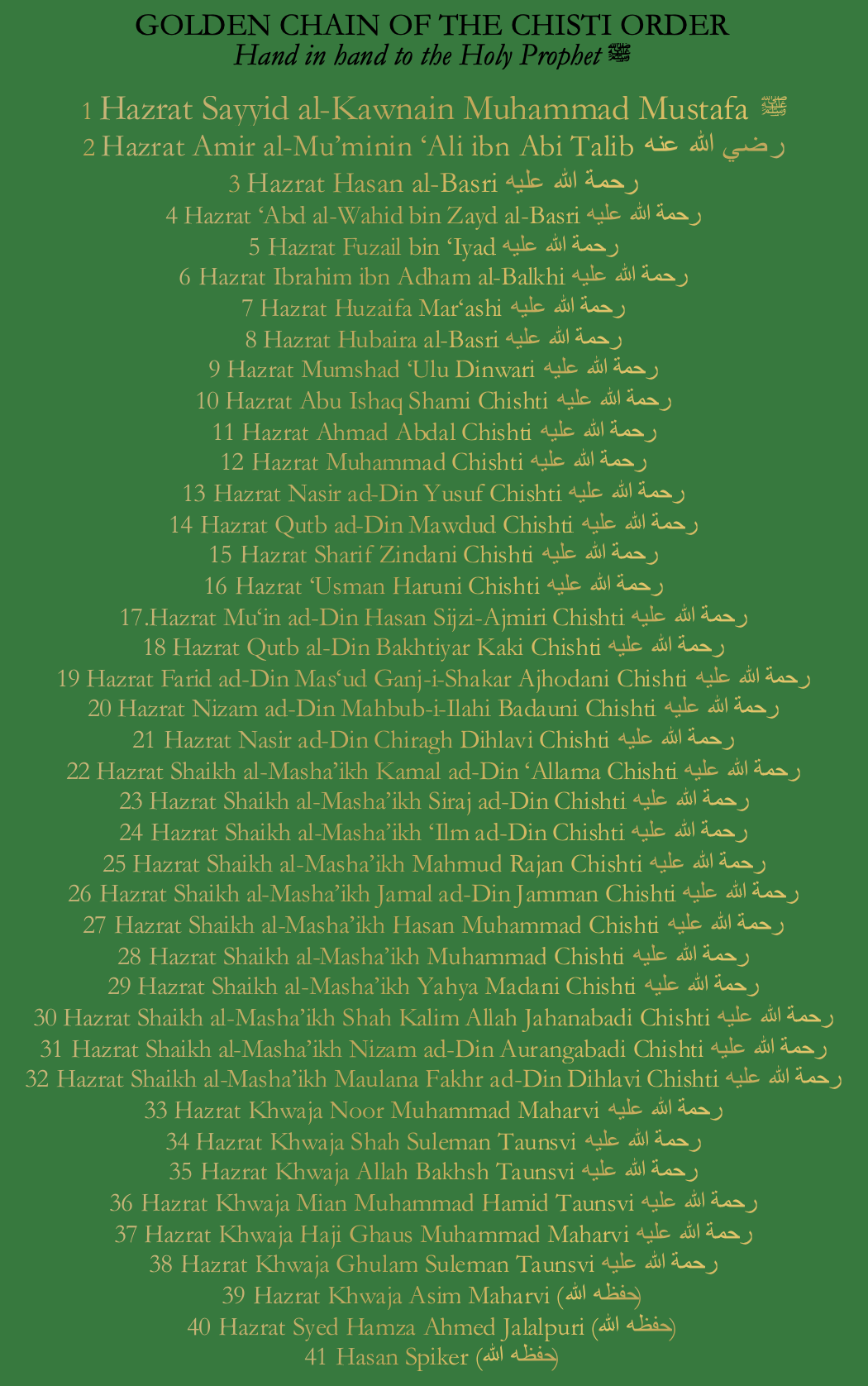
The Golden Chain of the Chisti Order
My feelings of inadequacy were now even more complete; but Syed Hamza assured me that the khwãjagãn or chain of masters had chosen me; and I told him that I only feel secure because this is taking place under the guidance of the Ahl al-Bayt, concerning whom the Holy Prophet ﷺ has assured us that we will never go astray, as long as we hold fast to them (Sunan al-Tirmidhī, 3786). Indeed, any lingering doubts about this vocation would soon disappear; not long after, I saw the Holy Prophet ﷺ in a dream, in which he ﷺ affirmed this new mode of service in the Chishti Order as valid and beneficial.
But that was after my return from Jalãlpur Sharĩf. I now turn to a brief account of my extraordinary visit.
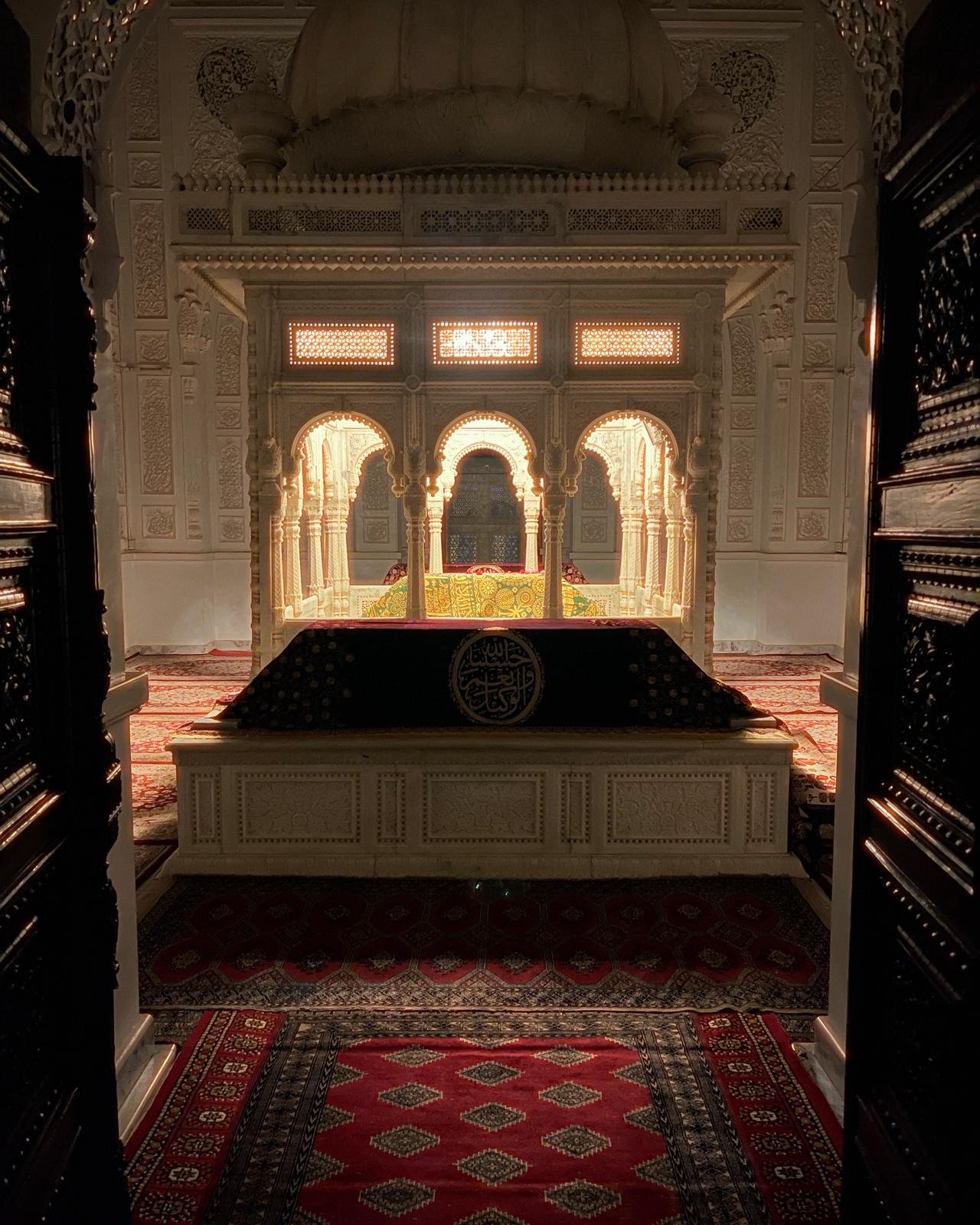
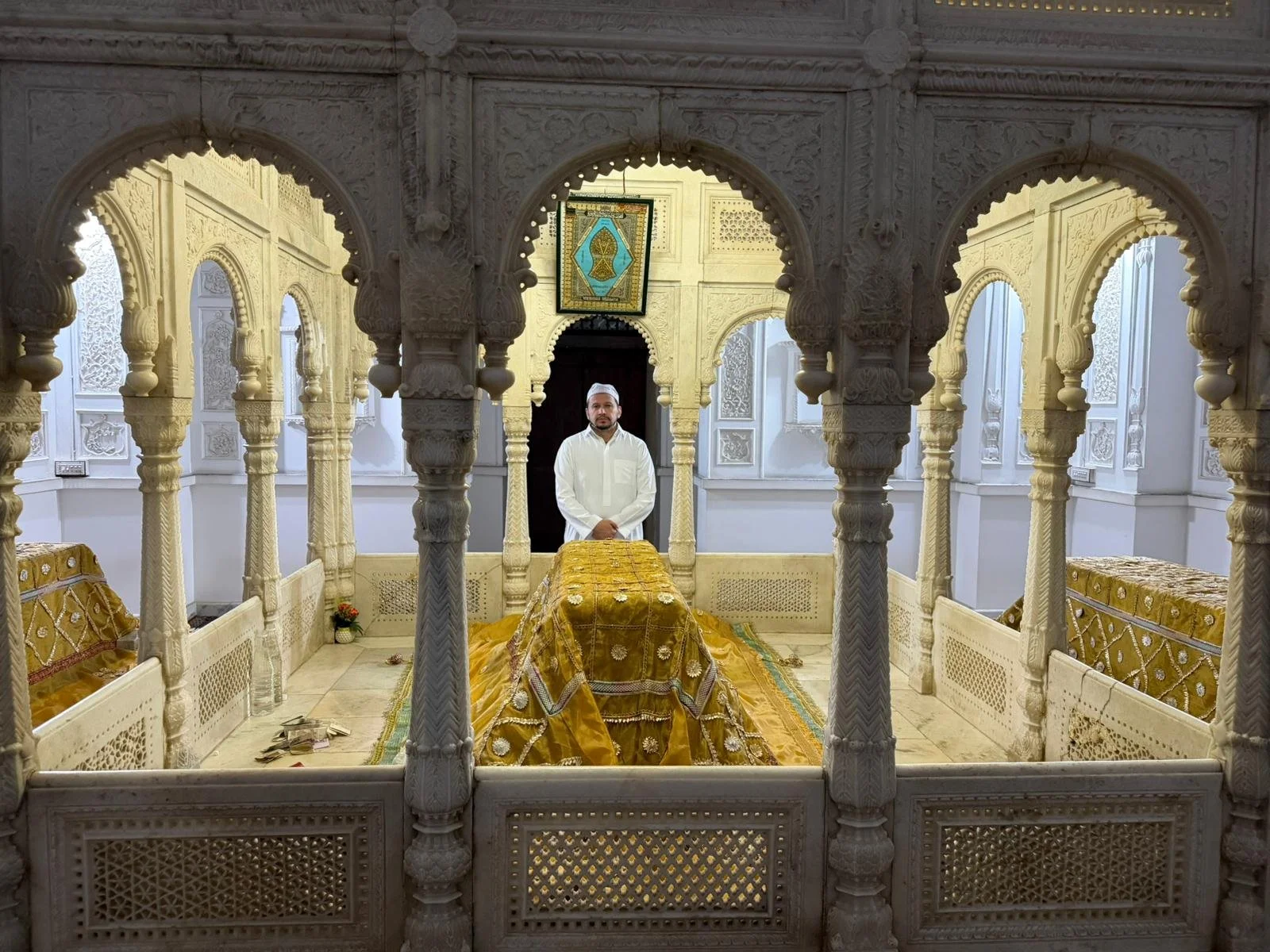
The blessed maqām burial site of Pīr Sayyid Ḥaydar ʿAlī Shāh in Jalalpur Sharif
JALALPUR SHARIF
Syed Hamza Jalalpuri and Hasan Spiker before the shrine of Pīr Sayyid Ḥaydar ʿAlī Shāh in Jalalpur Sharif
The shrine of Pīr Sayyid Ḥaydar ʿAlī Shāh, one of the great saints of the Indian Subcontinent in the 19th century, sits magnificently atop a hill in the town of Jalalpur Sharif in the Punjab, present-day Pakistan.
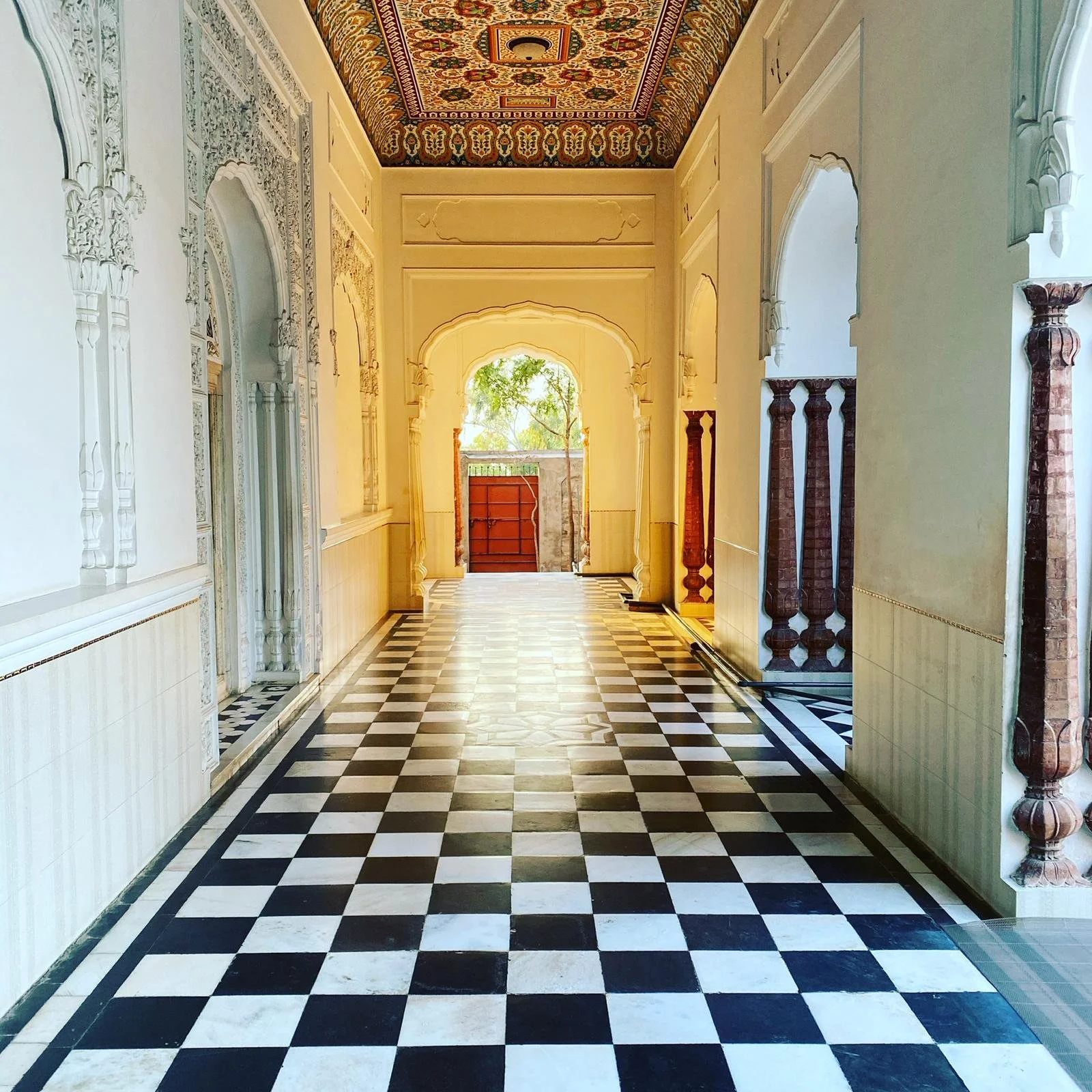
The approach and the shrine itself are masterpieces of Mughal architecture that have to be seen in person to be fully appreciated.
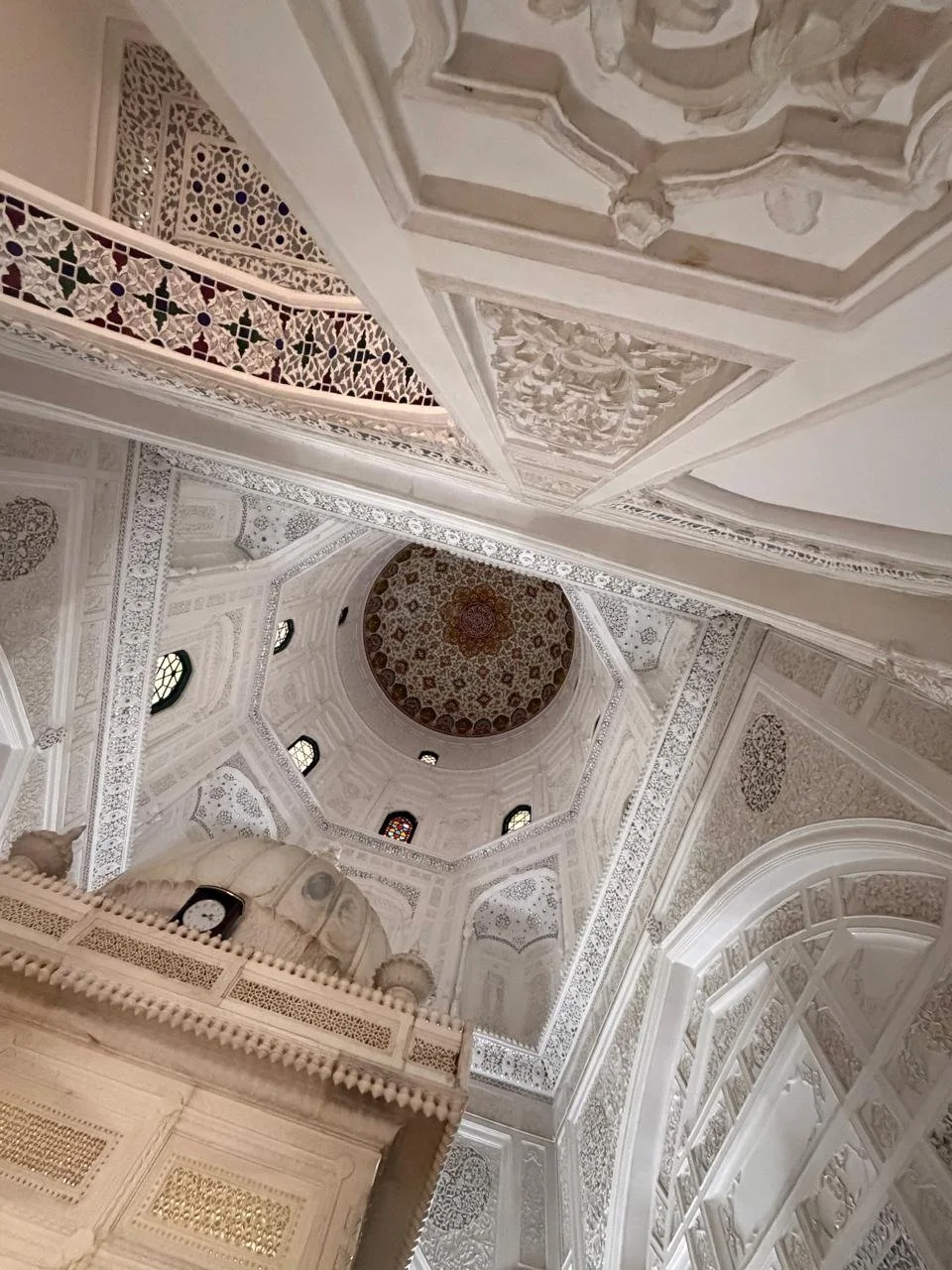
As one approaches the tomb, this outward harmony coalesces with a sense of profound inward peace. As Iqbal famously observed in one of his Persian verses,
As the glory of Mount Sinai do all who have visited it describe the tomb of Pīr Ḥaydar Shāh.
The simultaneous majesty and tranquility that envelops the tomb is indeed sublime. Syed Hamza and I sat there for many hours, reciting awrãd and praying. At a certain point, Syed Hamza directed me to sing a qasĩda I had also sung in the presence of Shaykh Madih at Uhud - We are at the Rawda of the Holy Prophet ﷺ by Shaykh Muhammad Ibn al-Habib, the great Moroccan Shaykh through whom my parents came to Islam and whose baraka has been a constant presence in my life. It was extraordinary to feel the power of that blessed poem resonate with the majestic calm of the maqãm.
The Langar and the Chisti Way of Love and Service
One of the most spiritually impactful moments of the trip took place when I visited the compound that Syed Hamza has had built adjacent to his family home in Jalalpur Sharif. There, a thousand people are fed every day in the ancient practice of langar, or feeding the poor, which is central to the Chishti Way. I was deeply touched to witness this; I noted to Syed Hamza that this kind of service to the poor and to the community is precisely the kind of work that Muslims in the West should be engaged in. It is the essence of Sufism.
Towards the end of my journey to Jalalpur Sharif, Syed Hamza reaffirmed my vocation; I am to bring together the Chishti Way of love and service, and the Akbari way of knowledge and metaphysical realisation, in a way that can serve the people of this time, so fragmented by modernity, so in need of a holism that unites the intellect, the heart and spirit, and the body in service to others.
It is a great honour and responsibility to be a servant on this way.
و ما توفيقي الا بالله
